
Runs
The batting team's score is measured in runs. The most common ways to add runs:
| How | Runs |
|---|---|
| Batters run one length of the pitch | 1 |
| Batters cross twice | 2 |
| Ball reaches the boundary along the ground | 4 |
| Ball crosses the boundary without bouncing | 6 |
Runs can also come from extras — runs not scored off the bat.
Overs
An over is a set of six legal deliveries bowled by one bowler from one end. After six balls:
- The bowling changes to the other end
- A different bowler usually starts the next over
- The field may be reset by the captain
In limited-overs cricket (ODIs and T20s), each innings has a fixed number of overs. In Tests, there is no over limit — an innings ends when the team is bowled out or the captain declares.
Extras
Extras are added to the team total without the batter hitting the ball:
- Wide — ball too far from the batter to hit; one run plus any runs run
- No-ball — illegal delivery (overstepping, dangerous bowling, etc.); one run plus any runs scored
- Bye — ball passes the batter and keeper; batters run without hitting
- Leg-bye — ball hits the batter's body (not the bat) and runs are taken
Wides and no-balls are rebowled in limited-overs cricket, so the over can extend beyond six legal deliveries.
Dismissals
Ten ways a batter can be out (you don't need to memorise all ten on day one):
- Bowled — ball hits the stumps
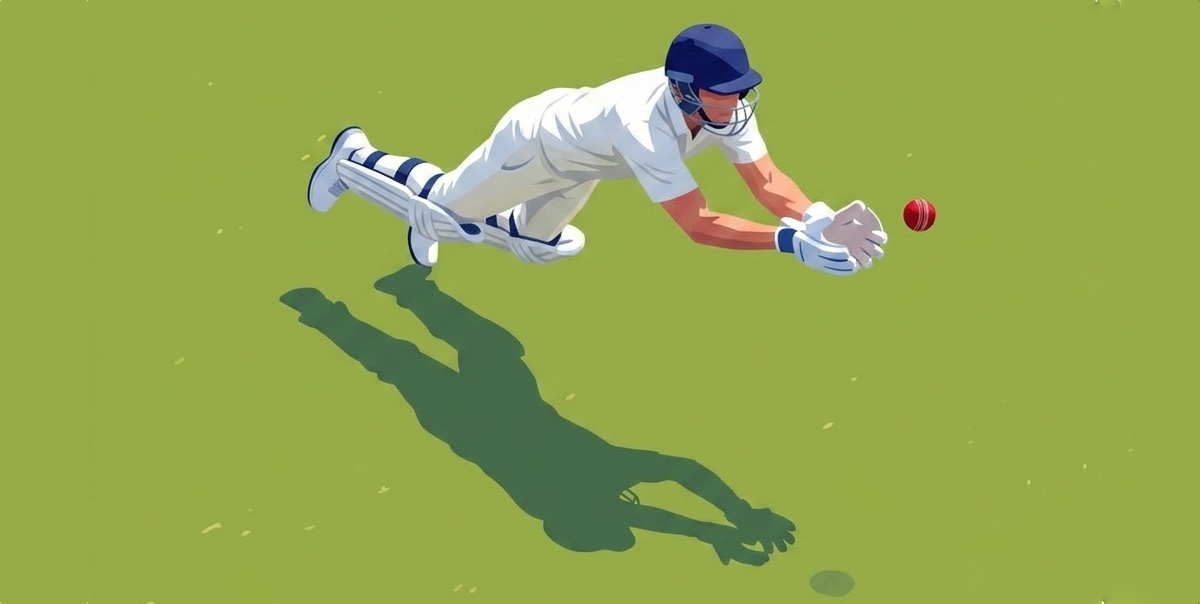
- Caught — fielder catches a struck ball before it bounces
- LBW — ball would have hit the stumps, strikes the batter's body first, and other conditions are met
- Run out — stumps broken while batters are running
- Stumped — keeper removes bails while batter is out of the crease, not attempting a run
- Hit wicket — batter dislodges the bails with bat or body
- Obstructing the field — batter deliberately blocks a fielder
- Hit the ball twice — rare; batter hits the ball twice deliberately
- Timed out — new batter takes too long to arrive
- Handled the ball — batter deliberately touches the ball with a hand (merged into obstructing the field in modern laws)
When the tenth wicket falls, the innings is over.
The Follow-On (Tests)
In a two-innings Test match, if the team batting second trails by a large margin (200+ runs in a five-day Test), the captain may be forced to bat again immediately — the follow-on — rather than bowling again first. This keeps long matches moving when one side dominates.
Powerplays (Limited Overs)
In ODIs and some T20 leagues, fielding restrictions apply during powerplay overs — only two or three fielders allowed outside the inner circle. This encourages aggressive batting early in the innings.
Typical ODI structure:
- Powerplay 1: overs 1–10 (two fielders outside the circle)
- Powerplay 2: overs 11–40 (four outside)
- Powerplay 3: overs 41–50 (five outside)
T20 powerplay rules vary by competition but follow the same principle: fewer fielders on the boundary early on.
Reading the Score
A typical scoreline looks like:
Australia 287/6 (50 ov)
- 287 — runs scored
- 6 — wickets lost (six batters out)
- 50 ov — overs faced
In Tests you might see England 412 & 198. The & means the team batted twice, scoring 412 in the first innings and 198 in the second.
What Wins the Match?
- Chasing team surpasses the target score → chasing team wins
- Bowling team dismisses the opposition for fewer runs → bowling team wins
- Test match can end in a draw if time runs out before a result (unique to the long format)
- Tie — scores level when the innings ends (rare; super overs sometimes decide knockout games)
Go Deeper
Bowling is where much of cricket's subtlety lives. For a narrative deep-dive on one of the game's great weapons, read The Rise of Swing Bowling.
For unfamiliar terms as you watch, keep the Cricket Terms Glossary handy.