
The Rise of Swing Bowling: How Movement in the Air Changed Cricket Forever
There was a time when fast bowling meant one thing: pace. Sheer, rattling pace. Bowlers charged in, batsmen braced themselves, and the contest was settled on reflex alone. But as bats grew thicker, pitches grew flatter, and technique grew safer, cricket needed a different kind of menace.
It found it in the air.
Swing bowling,subtle, intelligent, and quietly ruthless,emerged as the great counterpunch. Not with fireworks, but with deception. Not with noise, but with doubt.
When Bowlers Let the Ball Do the Talking
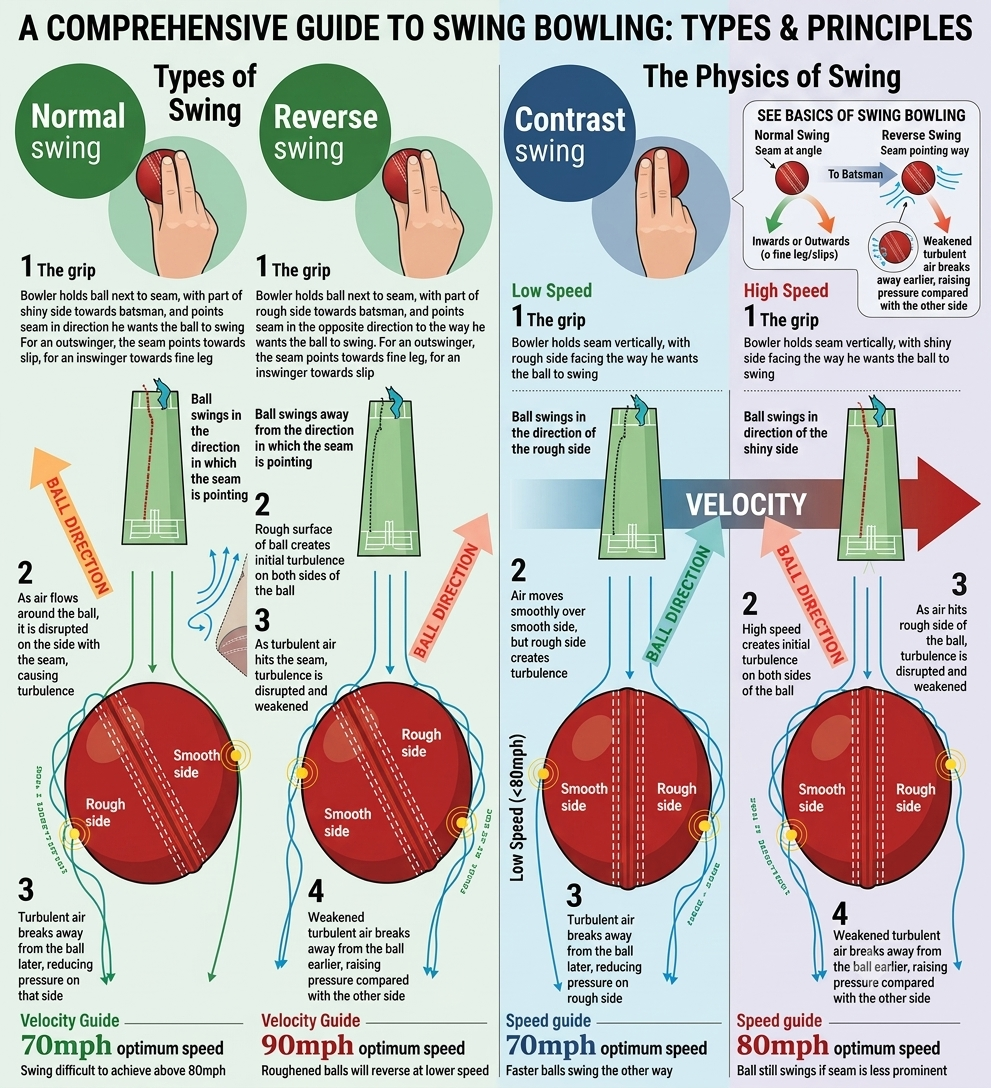
In the early days, swing bowling was less science and more street wisdom. One side of the ball polished until it shone like a coin, the other left to darken and roughen. The seam held upright, the wrist firm. Then hope,and experience,did the rest.
Nowhere did this craft flourish like England. Under heavy skies and on grassy pitches, bowlers discovered that movement through the air could unsettle even the most organised batting line-ups. The ball didn’t just arrive,it arrived late, changing direction when it mattered most.
Swing bowling was born not in laboratories, but in county grounds, cold mornings, and long spells.
From Craft to Calculation
As the game modernised, swing bowling evolved with it. What was once instinct became instruction. Aerodynamics explained the forces at play. Coaches broke down wrist position, seam angle, and release height.
Swing was no longer a trick,it was a skill set.
Young fast bowlers learned that pace alone wouldn’t guarantee wickets. Control, repetition, and patience mattered more. The best exponents could swing the ball on demand, shaping it into the batter and then taking it away with the same action.
The Men Who Made It Move
Every era has its swing bowlers,the ones who seemed to bend the laws of physics.
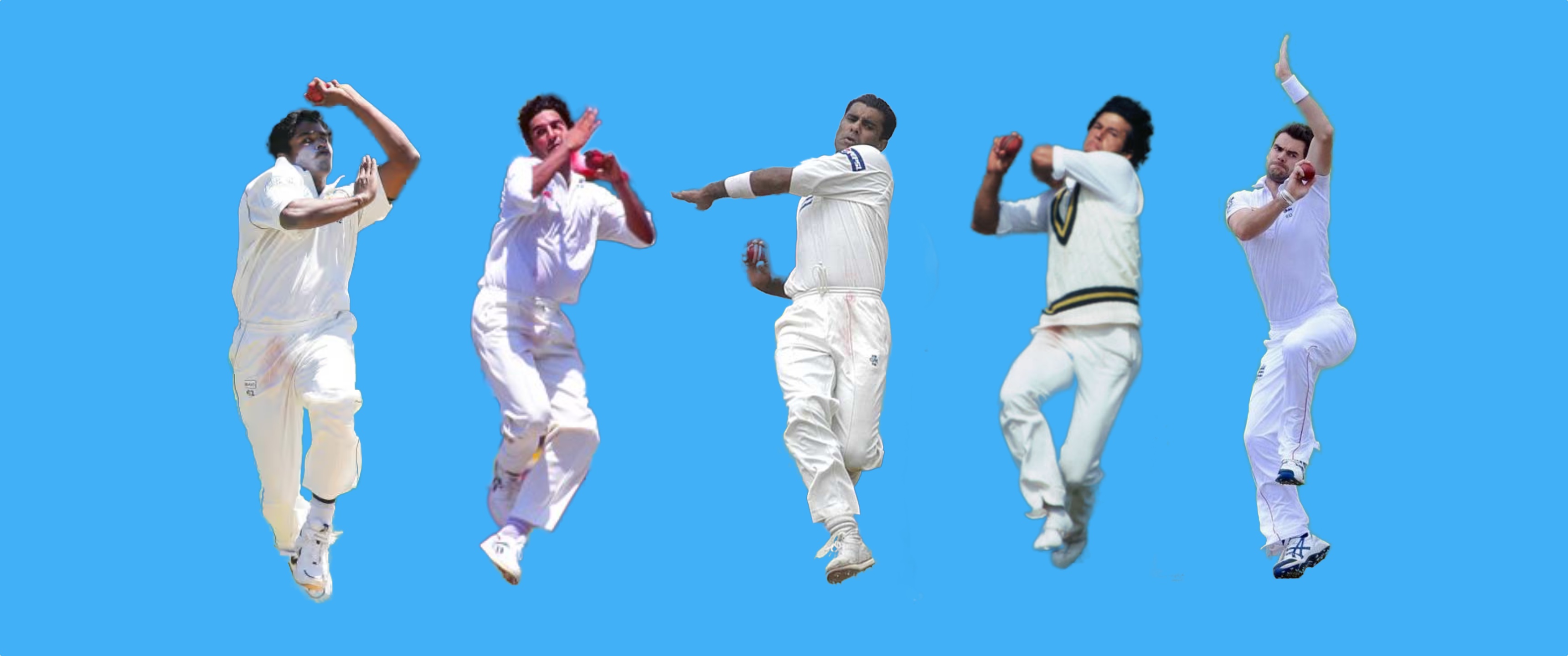
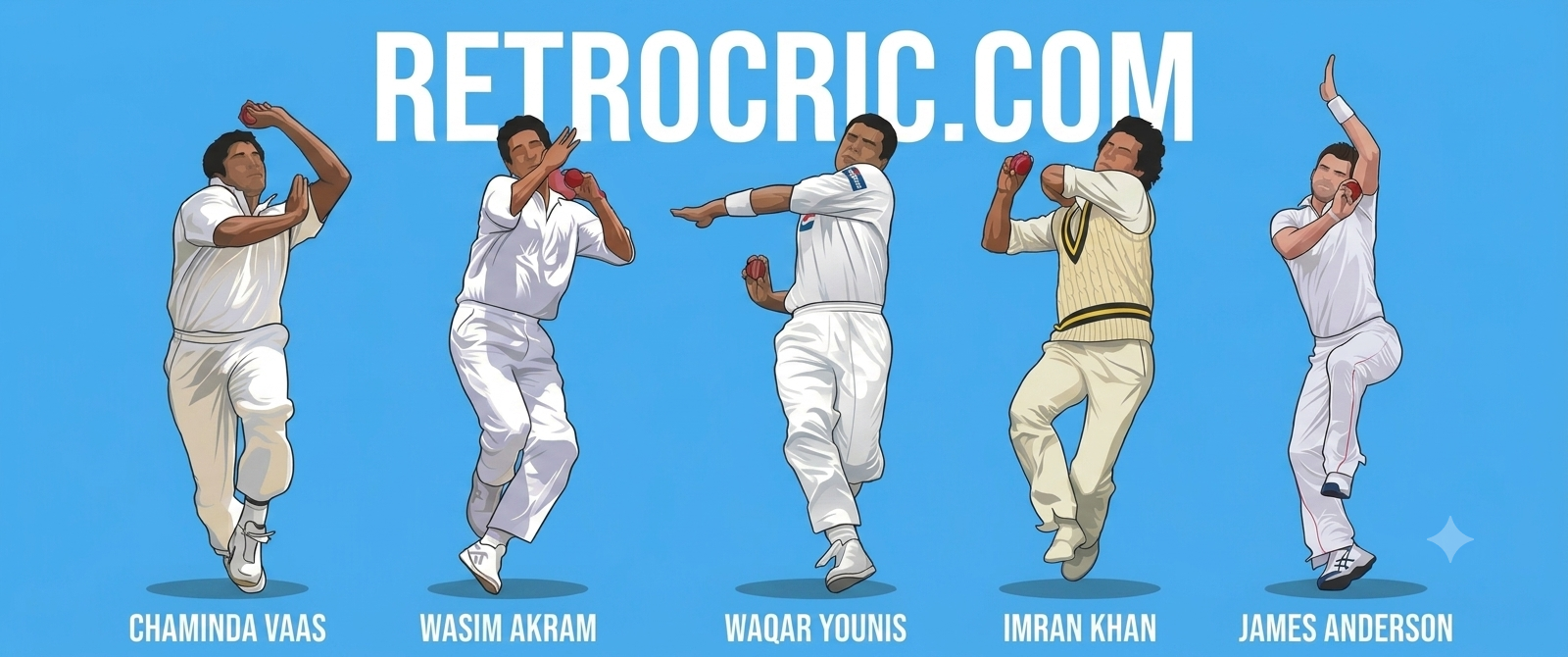
Wasim Akram was the ultimate illusionist, swinging the ball at high pace both ways, then introducing the world to reverse swing as a lethal weapon. Imran Khan refined it into a system. Chaminda Vaas showed how swing could dismantle sides quietly and efficiently.
And then there was James Anderson,the modern master,proving that swing bowling could survive into its late thirties, even forties, built not on speed but on precision and feel.
They all proved the same truth: swing bowling isn’t defensive. It’s deeply aggressive.
Reverse Swing: The Late-Innings Revelation
If conventional swing was a revelation, reverse swing was a revolution.
Suddenly, an old, battered ball wasn’t harmless,it was dangerous. At high speeds, with one side brutally rough, the ball moved late and sharply, often at the point where bat met pad.
Reverse swing returned fast bowlers to relevance on dead pitches and in brutal heat. It punished footwork, exposed indecision, and turned survival into an art form for batters.
It was cricket reminding everyone that age doesn’t mean weakness, not for bowlers, and not for the ball.
Swing in the Age of Power
In today’s game of ramps, scoops, and switch-hits, swing bowling still matters. Perhaps more than ever.
In white-ball cricket, early swing remains priceless. A moving new ball forces batters to rethink aggression, to hesitate,and hesitation is fatal. In Tests, swing remains the ultimate examination of technique, patience, and temperament.
No matter the format, movement through the air still creates fear.
Why Swing Bowling Will Never Go Out of Fashion
Cricket evolves, but doubt never disappears.
Swing bowling thrives on uncertainty,the half-step forward, the delayed bat, the indecision between pad and blade. It doesn’t overpower; it outthinks. It doesn’t shout; it whispers.
And in that whisper lies its enduring power.
As long as there are bowlers willing to polish one side of the ball and believe in late movement, swing bowling will remain one of cricket’s purest and most devastating arts.