
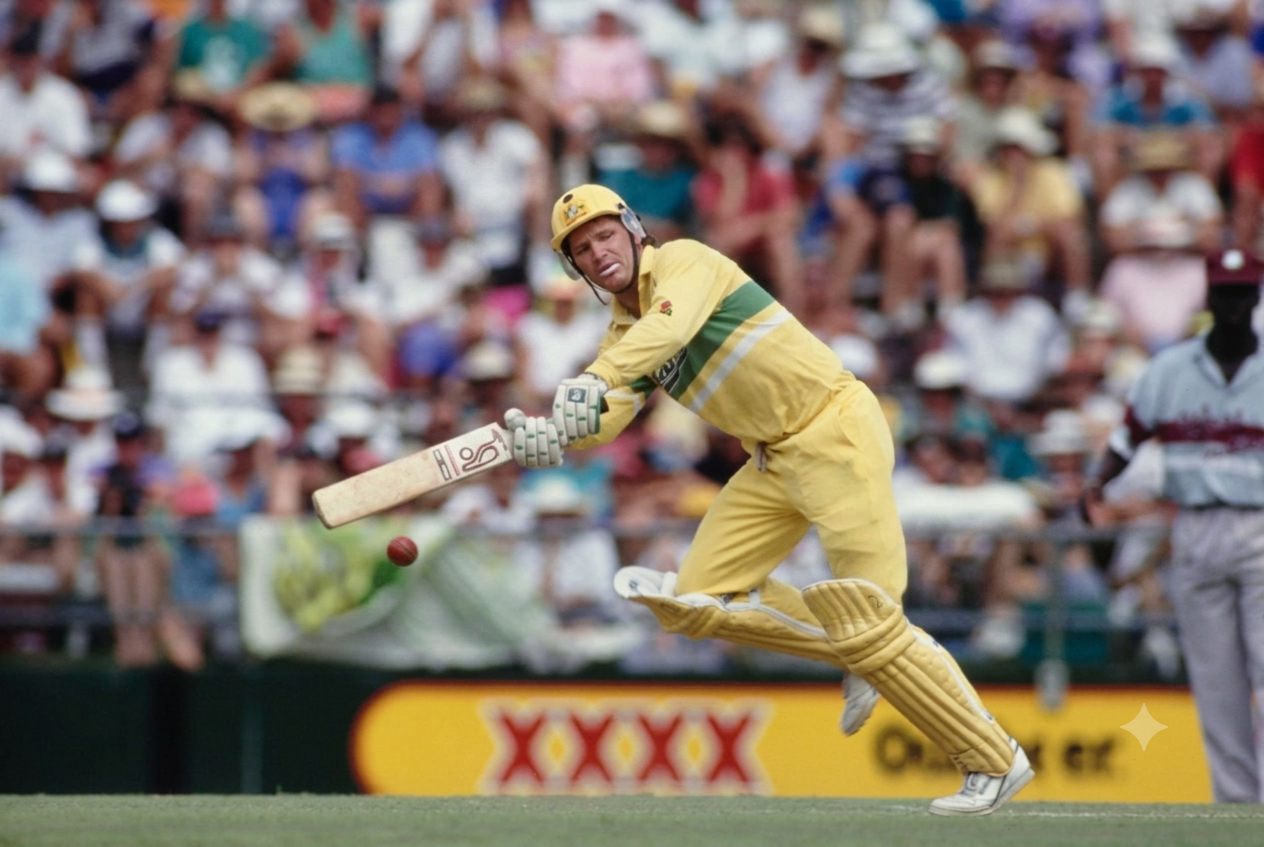
The 1987–88 Cricket World Series Cup wasn't just about brilliant batting and fiery fast bowling — it also produced some of the most spectacular catches ever seen on Australian grounds.
From stunning diving efforts to incredible reflex grabs in the slips and breathtaking boundary catches, these moments showcased the athleticism and commitment of cricket's biggest stars. Take a trip back to one of the golden eras of one-day cricket and relive the catches that had commentators, teammates, and fans in absolute disbelief.
A Summer Built for Theatre
The Benson & Hedges World Series Cup of 1987–88 brought Australia, New Zealand, and Sri Lanka together across Perth, Adelaide, Hobart, Brisbane, Melbourne, and Sydney — day-nighters under the lights, packed houses, and a home side still riding the high of their first World Cup triumph months earlier.
Allan Border's Australia dominated the round robin, then closed out New Zealand 2–0 in the finals. Geoff Marsh piled on the runs. Steve Waugh was Player of the Preliminary Series. Dean Jones took Player of the Finals. But for many who lived that January under the floodlights, the lasting memory was not only the scoreboard — it was the sound of leather meeting outstretched hands.
This was limited-overs cricket before ropes, before DRS, before every chance was slowed to frames. When a catch stuck, the roar told you everything. When it didn't, the silence told you more.
Diving Efforts That Stopped the Crowd
The World Series Cup rewarded fielders who refused to treat a half-chance as a miss.
Full-length dives at cover and midwicket, bodies horizontal, fingers clawing at a ball that should have been four — those were the moments that turned ordinary overs into folklore. Australian grounds, with their big outfields and sharp edges under lights, gave fielders room to sprint and time to misjudge. The best ones did neither.
Dean Jones embodied the era's athletic standard: electric between the wickets, fearless in the deep, part of a side that had already decided fitness and fielding could win tournaments as surely as centuries. Around him, Border's men hunted as a unit — closing angles, backing up, treating every mis-hit as an invitation.
Reflex Grabs in the Slips
Not every spectacular catch needed a forty-yard sprint.
In the slips and close cordon, the World Series produced those blink-and-you-missed-it takes — edges flying off the bat at catchable height, or dying just as quickly. Soft hands. Late reactions. The kind of grab that leaves the batsman halfway down the pitch before reality arrives.
With Craig McDermott, Tony Dodemaide, and Steve Waugh generating bounce and movement, chances came thick and often. Holding them was the difference between a quiet over and a collapse. Greg Dyer's gloves behind the stumps were busy all summer; so were the men standing beside him, waiting for the snick that would tilt a night.
Boundary Catches That Ended Contests
Then there were the catches that decided matches in a single leap.
At the MCG on 7 January 1988, New Zealand needed eight from the last over with Richard Hadlee still there. Hadlee lofted Steve Waugh toward deep mid-off — and Peter Taylor held the catch. Australia won by six runs. One grab. One summer night. A chase that had looked alive was suddenly over.
That was World Series cricket in miniature: big grounds, big moments, and fielders who understood that the boundary was not a place to loiter. Running catches, leaping takes above the rope line, juggling efforts that somehow stayed in — these were the plays that sent crowds into disbelief and teammates into each other's arms.
Why Those Hands Still Echo
Batting and bowling write the headlines. Catching writes the gasps.
The 1987–88 World Series Cup sits in that sweet spot of one-day cricket's golden Australian summers — pre-franchise, pre-super-slow-mo saturation, when a spectacular catch lived on in memory and grainy highlight reels rather than endless clips. Commentators ran out of adjectives. Teammates looked as stunned as the fans. Opponents walked off knowing a half-chance had been turned into a full stop.
Relive those diving efforts, those slip snares, those boundary miracles, and you are not just watching athleticism. You are watching an era that believed every ball in the air was still in play — and proved it, again and again, under Australian lights.