

200 off just 153 balls against England in Christchurch. He finished with 222 runs from 168 balls.
Nathan Astle's fourth-innings assault at Jade Stadium remains one of the most extraordinary individual performances Test cricket has ever seen — a home-ground masterpiece that rewrote the record books even as New Zealand fell short.
The Chase That Should Have Been Hopeless
The first Test of England's 2001–02 tour of New Zealand, played from 13 to 16 March 2002, had already swung hard England's way. After being dismissed for 228 in the first innings, Nasser Hussain's side piled on 468 for 6 declared in the second. New Zealand, who had managed only 147 first up, were left chasing 550.
Few fourth-innings targets of that size end in anything but defeat. England's attack — Andy Caddick, Matthew Hoggard, Andrew Flintoff, Ashley Giles — looked set to close it out with a day to spare. Then Astle, batting at number five on his home ground, decided the script needed shredding.
From Survival to Mayhem
For a time it was still a proper Test innings. Astle built carefully enough to keep New Zealand alive. Then the tempo shifted — and never shifted back.
The second hundred. He raced from 100 to 200 in just 39 balls, tearing into Hoggard and Caddick with a freedom that belonged more to limited-overs cricket than a fourth-day Test chase.
The landmark. A swept single off Giles took him to 200 from only 153 deliveries — then the fastest double century in Test history, 59 balls quicker than Adam Gilchrist's mark set weeks earlier in Johannesburg. It remains the quickest Test double hundred ever made.
When the ninth wicket fell, Astle was on 134. Injured Chris Cairns still walked out. Together they added 118 for the last wicket — 50 off 24 balls, 100 off 56 — a New Zealand tenth-wicket record against England. Cairns's knee may have been shot; the partnership was not.
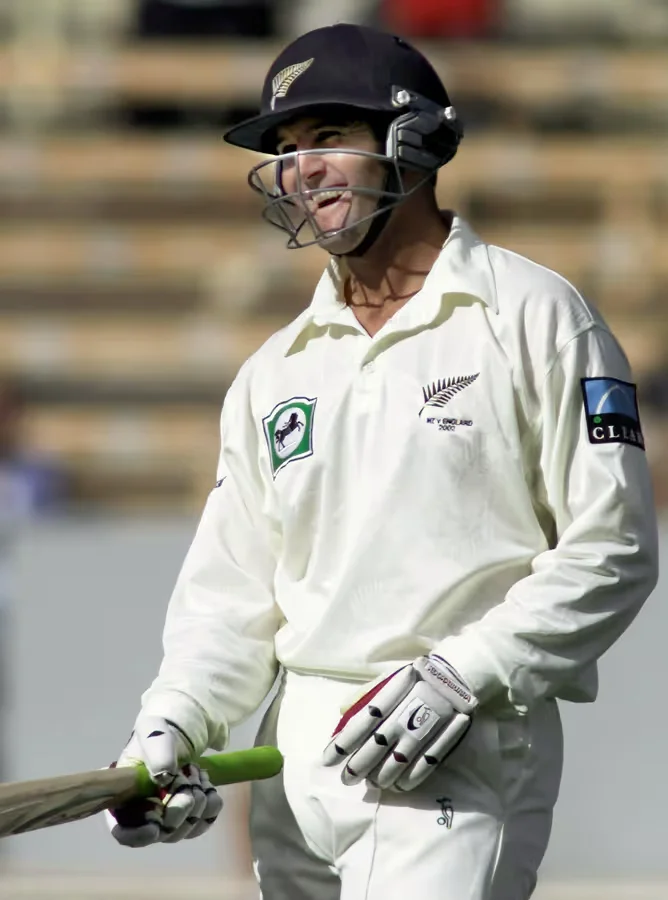
The Final Tally
Astle was last out for 222 from 168 balls, caught behind off Hoggard — 28 fours, 11 sixes, strike rate 132. New Zealand finished on 451, still 98 runs short. England had won the Test, but the day belonged to Astle.
It was the highest score by a New Zealander against England, eclipsing Martin Donnelly's 206 at Lord's in 1949. The 11 sixes were then the most by a New Zealander in a Test innings. And 222 in a losing cause remains one of the great "what if" scores in the game — the highest individual innings in a defeat at the time, and still among the greatest fourth-innings efforts ever played.
Astle's Christchurch 222 at a Glance
| Milestone | Detail | Impact |
|---|---|---|
| Match | 1st Test, Jade Stadium, March 2002 | England won by 98 runs |
| Double century | 200 off 153 balls | Fastest Test double hundred (still stands) |
| Final score | 222 off 168 (28×4, 11×6) | Highest by a New Zealander vs England |
| 10th-wicket stand | 118 with Chris Cairns | NZ record vs England for the last wicket |
Why It Still Echoes
Most famous chases are remembered because they succeed. Astle's is remembered because it nearly made the impossible feel inevitable.
He did not merely score quickly; he remade the geometry of a lost cause — forcing England's bowlers to bowl to fields that no longer made sense, turning a dead match into theatre. Graham Thorpe's 200 not out earned him man of the match. History has been kinder to the man who finished second on the scorecard.
On that Christchurch afternoon, Nathan Astle proved that a Test innings could be both a wrecking ball and a work of art — 200 off 153, 222 off 168, and a place in the game's folklore that no victory margin can erase.